Airline coffee tastes terrible because of contaminated water systems, poor brewing practices, and—well, honestly—your taste buds don’t work properly at altitude. The water pipes in planes are often neglected, leading to bitter, metallic flavors. Coffee sits on burners way too long while flight attendants juggle multiple tasks. Actually, altitude reduces your sensitivity to sweet flavors by 15-20%, making everything taste dull. These factors combine to create what many describe as liquid cardboard, though there are ways airlines could fix this brewing disaster.
Water Quality and Infrastructure Challenges
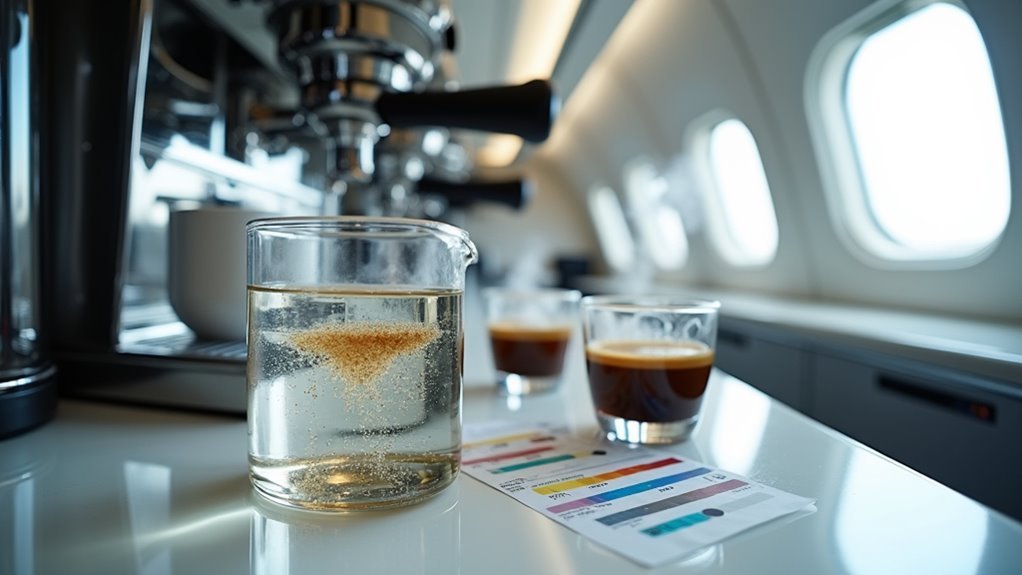
While passengers often blame the coffee beans themselves, the real culprit behind that awful airline coffee might actually be lurking in something far more basic—the water.
Airlines don’t always prioritize water quality, and honestly, it shows. The cleanliness of water pipes is essential, but – well, let’s just say maintenance isn’t always consistent.
Contaminated water can create unpleasant flavors that even the best coffee beans can’t mask. It’s like trying to make a gourmet meal with spoiled ingredients.
When water quality gets overlooked, passengers inevitably end up with that bitter, metallic taste they’ve come to expect.
Brewing and Storage Time Issues
Even after airlines manage to source decent water, they often fumble the ball when it comes to timing.
Coffee that’s been sitting on a burner for hours becomes bitter and stale – it’s like drinking liquid cardboard. Flight attendants don’t necessarily know when that pot was first brewed, and honestly, they’re probably too busy with other tasks to worry about it.
Overworked flight attendants can’t track brew times, leaving passengers stuck with stale coffee that tastes like liquid cardboard.
The demand for coffee varies wildly during flights, so sometimes you’re getting fresh brew, other times you’re getting the dregs from three hours ago.
Timing, well, it really makes or breaks the whole experience.
How Altitude Affects Your Taste Buds
Beyond the brewing mishaps happening in the galley, there’s something even more fundamental at work – your taste buds literally don’t function the same way at 35,000 feet.
| Taste Type | Change at Altitude |
|---|---|
| Sweet flavors | Reduced by 15-20% |
| Salty tastes | Diminished sensitivity |
| Bitter notes | Less pronounced |
| Aroma perception | Noticeably dulled |
| Overall satisfaction | Drops considerably |
The dry cabin air and lower air pressure actually numb your taste receptors. It’s like your mouth is wearing mittens – everything becomes muted. Coffee’s subtle flavors get lost, making even premium blends taste flat and unremarkable.
Service Standards and Preparation Methods
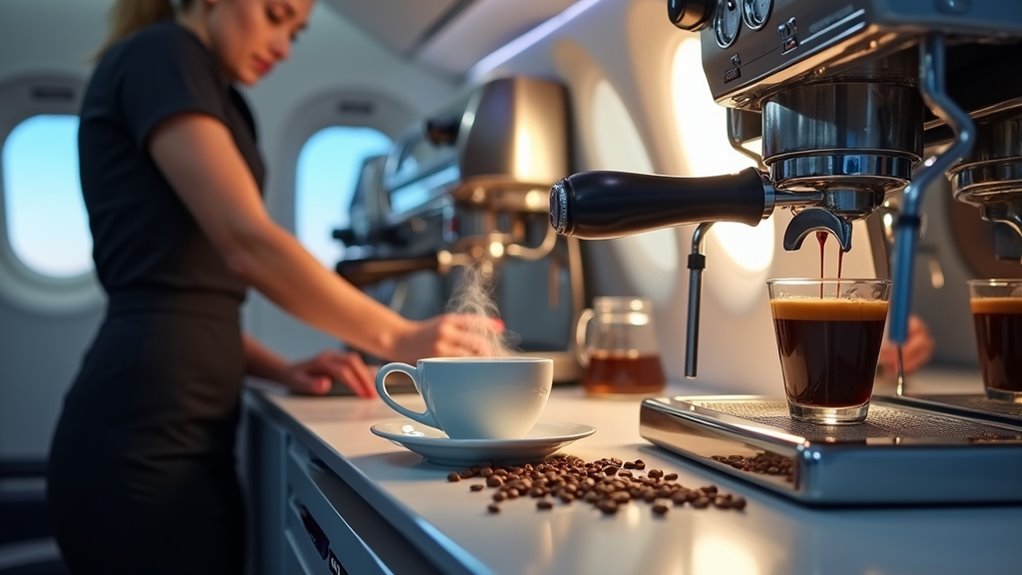
Flight attendants juggle dozens of tasks during service, and honestly, coffee preparation often gets the short end of the stick.
They’re managing safety protocols, passenger requests, and meal service – well, coffee becomes an afterthought. Many airlines don’t actually train staff on proper brewing techniques. The coffee sits on burners way too long because there’s simply no time to monitor freshness.
I think it’s unfair to blame flight attendants, though. They’re working with subpar equipment in cramped galleys.
Maybe airlines should invest in better preparation standards, but that probably costs money they’d rather save.
Frequently Asked Questions
Why Don’t Airlines Just Use Premium Coffee Brands to Improve Quality?
Airlines often already use popular coffee brands, but premium beans alone cannot overcome fundamental issues like poor water quality, extended brewing times, altitude-affecting taste perception, and inconsistent service that plague in-flight coffee preparation.
Do First-Class Passengers Get Better Coffee Than Economy Passengers?
First-class passengers typically receive higher-quality coffee brands and more attentive service, but they still face the same fundamental challenges of altitude, water quality, and brewing time that affect all airline coffee.
Which Airlines Are Known for Having the Best Coffee Quality?
Several airlines receive recognition for superior coffee quality, including Emirates, Singapore Airlines, and Turkish Airlines. These carriers typically invest in premium bean sourcing, proper brewing equipment, and staff training to enhance passenger coffee experiences.
Can Passengers Bring Their Own Coffee Makers on Flights?
Passengers generally cannot bring coffee makers on flights due to security restrictions and safety concerns. Small electric appliances are prohibited in carry-on luggage, though instant coffee packets are typically allowed.
How Much Does Poor Coffee Quality Affect Airline Customer Satisfaction Ratings?
Like a restaurant losing repeat customers over consistently burnt toast, poor airline coffee greatly impacts satisfaction ratings. Studies show beverage quality influences overall flight experience perceptions, with dissatisfied passengers rating airlines lower across multiple service categories.