
Angola’s coffee heritage stretches back to the 1830s when Portuguese colonizers first introduced this golden crop that would eventually make the nation Africa’s third-largest producer. The country’s four distinct robusta varieties—Amboim, Ambriz, Cazengo, and Cabinda—actually defy typical robusta expectations with their smooth, naturally sweet profiles featuring chocolate and earthy notes. Though civil war disrupted production in 1975, leaving many plantations abandoned, Angola’s coffee culture remains deeply rooted in its agricultural identity and ongoing recovery efforts promise to reveal even more remarkable discoveries.
The Portuguese Legacy: Coffee’s Arrival in 1830s Angola
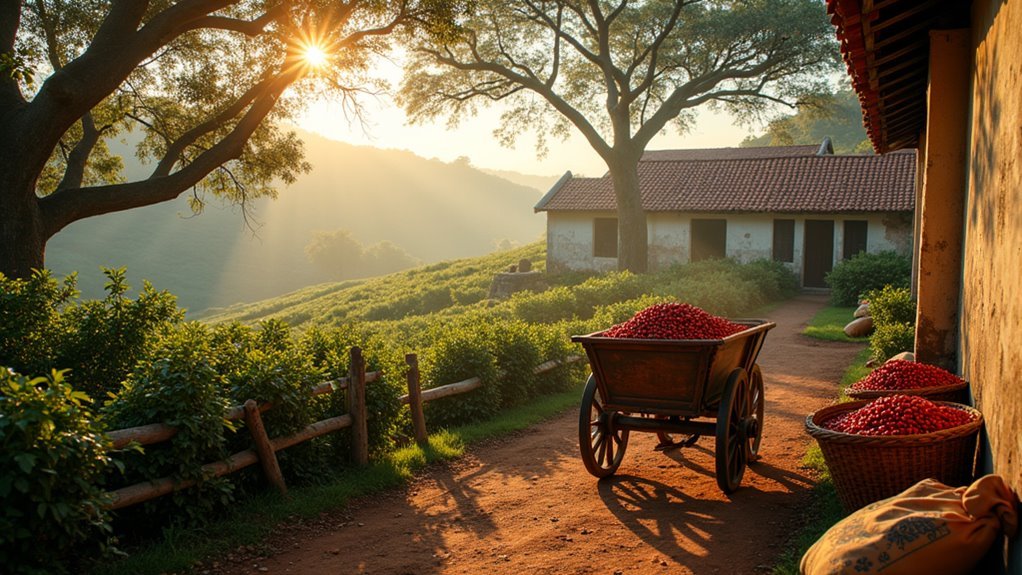
Legacy, as they say, often arrives through unexpected channels.
When Portuguese colonizers stepped onto Angolan soil in the 1830s, they probably didn’t realize they were planting the seeds of what would become a coffee empire. Well, actually, they were literally planting seeds – coffee seeds.
A Brazilian farmer established the first commercial plantation, and honestly, the timing couldn’t have been better.
Coffee quickly transformed into Angola’s golden crop. By the early 1970s, this African nation had climbed to third place globally in coffee production.
That’s pretty impressive for a relatively late starter in the coffee game.
Understanding Angola’s Four Distinguished Robusta Varieties
What really sets Angola apart in the coffee world isn’t just its impressive production history – it’s the four distinct varieties of robusta that flourish in its soil.
These aren’t your typical robusta beans, actually. Amboim, Ambriz, Cazengo, and Cabinda each bring something unique to the table.
Well, Amboim stands out as the crown jewel – it’s probably the most sought-after variety, commanding higher prices for its exceptional taste profile that honestly rivals some arabicas.
Amboim robusta commands premium prices with its exceptional flavor profile that genuinely competes with high-quality arabica varieties.
- Sun-drenched plantations where coffee cherries ripen slowly under Angola’s warm African sky
- Local farmers carefully hulling beans by hand on weathered wooden tables
- Rich, earthy aromas rising from naturally processed coffee drying on traditional mats
War’s Impact and the Path to Agricultural Recovery
When Angola’s civil war erupted in 1975, it didn’t just tear apart communities – it basically destroyed what had been one of Africa’s most promising coffee industries.
Plantations that once thrived were abandoned, leaving coffee plants to grow wild and untended. Well, the devastation wasn’t just about neglect – many farms became literal minefields, making recovery incredibly dangerous.
Today, rehabilitation efforts are slowly bringing hope back to rural communities. The government’s implementing new policies to support farmers, though progress feels frustratingly slow.
Disease and pests continue affecting the plants, but there’s growing optimism that Angola’s coffee heritage might actually flourish again.
Savoring the Smooth Sweetness of Angolan Coffee

Despite all the challenges facing Angola’s coffee industry, there’s something genuinely remarkable happening when you actually taste what these resilient plants are producing.
Angola’s robusta coffee breaks every expectation you might have about this bean variety. It’s smooth, naturally sweet, and doesn’t need blending to achieve its unique character—which is pretty unusual for robusta.
The flavor profile feels like discovering a hidden gem that’s been waiting decades for recognition.
- Steam rising from a cup revealing notes of chocolate and earth
- Golden honey sweetness coating your palate without any added sugar
- Morning sunlight streaming through windows as you savor each sip
Frequently Asked Questions
How Much Does Angolan Coffee Typically Cost Compared to Other African Coffees?
The provided knowledge does not contain specific pricing information for Angolan coffee compared to other African coffees. Government pricing policies affect farmer income, but actual market prices remain unspecified in available data.
Which Countries Are the Largest Importers of Angola’s Coffee Beans Today?
Angola’s largest coffee importers today are not specifically identified in available data. However, exports to America have resumed recently, increasing accessibility. European markets and neighboring African countries likely remain significant destinations for Angola’s robusta varieties.
What Certifications Do Angolan Coffee Farms Have for Organic or Fair Trade?
A small farm in Huambo province struggles to afford organic certification fees despite using traditional pesticide-free methods. Currently, most Angolan coffee farms lack formal organic or fair trade certifications due to costs and limited institutional support systems.
How Do I Properly Store Angolan Robusta Beans to Maintain Freshness?
Store Angolan robusta beans in airtight containers away from light, heat, and moisture. Keep them at room temperature in a cool, dry place. Avoid refrigeration or freezing, which can affect flavor and create condensation.
Are There Any Major Coffee Cooperatives or Associations Supporting Angolan Farmers?
While massive rehabilitation efforts dramatically sweep across Angola’s coffee landscape, specific major cooperatives remain largely unmentioned in available documentation. Government support and new policies currently drive revival initiatives, though detailed cooperative structures aren’t clearly identified.


