
Costa Rica’s coffee culture began in the late 1700s, but it wasn’t until the 1830s that coffee really became the country’s golden crop. Today, over 90% of their production gets exported – we’re talking about 15 million bags annually. What makes Costa Rican coffee special is their focus on quality; they actually banned Robusta beans in 1989 to concentrate on premium varieties. Eight distinct growing regions produce unique flavor profiles, from Tarrazú’s high acidity to Guanacaste’s balanced notes. There’s so much more to explore about their brewing techniques and quality standards.
The Origins and Evolution of Costa Rican Coffee Culture
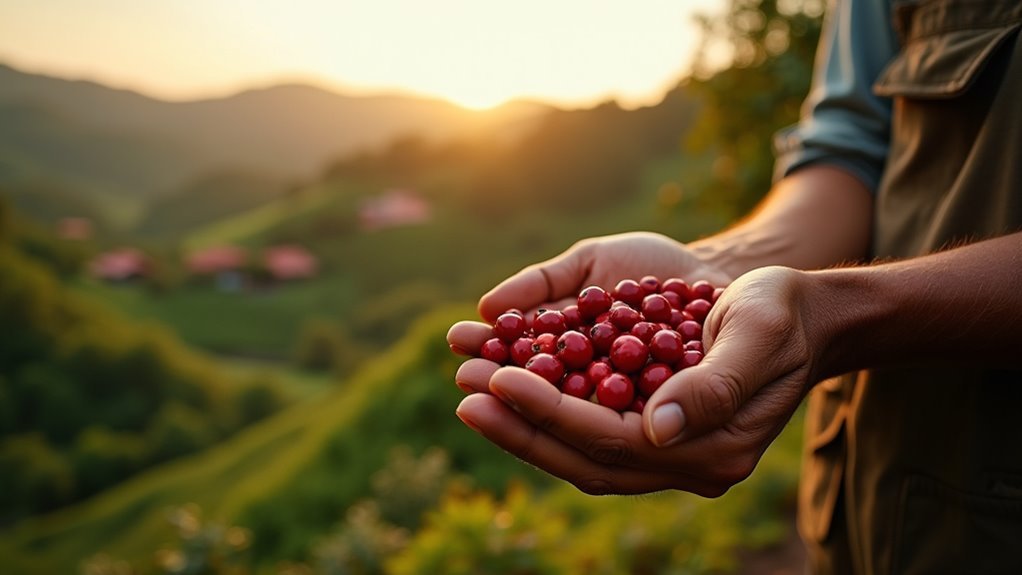
The fertile volcanic slopes of Costa Rica tell a story that began in the late 1700s, when coffee seeds first found their way into this Central American paradise.
Well, it wasn’t exactly an overnight success—actually, it took decades before coffee really caught on.
By the 1800s, the government was practically giving away land to anyone willing to grow coffee. Smart move, really.
By 1830, coffee had beaten out tobacco, cacao, and sugar to become the country’s golden crop.
Then in 1843, an English ship captain discovered these beans and—boom—Costa Rican coffee found its first international market.
Current State of Costa Rica’s Coffee Industry
Fast-forward to today, and Costa Rica’s coffee industry is—well, it’s basically the backbone of the country’s agricultural economy.
Over 90% of their coffee gets exported, which is pretty impressive when you think about it. We’re talking roughly 15 million bags annually. Coffee remains their number one cash crop, and here’s what really strikes me: about 10% of families depend on coffee farming for their livelihood.
That’s a lot of people whose daily bread—or should I say daily brew—relies on those little red cherries growing on mountainside plantations across eight distinct regions.
Eight Distinctive Coffee Growing Regions and Their Unique Flavors
Across Costa Rica’s mountainous landscape, eight distinct coffee-growing regions each produce beans with their own personality—and honestly, it’s pretty fascinating how geography can shape flavor so dramatically.
| Region | Flavor Profile |
|---|---|
| Tarrazú | High acidity, excellent aromatics (premier region) |
| Guanacaste | Balanced, medium body, muted floral notes |
| Valle Central | Bright, classic Costa Rican characteristics |
| Tres Ríos | Complex, well-balanced acidity |
| Valle Occidental | Clean, crisp flavor notes |
All regions share that signature high acidity and bright flavor that Costa Rican coffee’s known for, but each area’s unique climate creates subtle differences that coffee enthusiasts can actually taste.
Brewing Techniques to Maximize Costa Rican Coffee’s Potential

When it comes to brewing Costa Rican coffee, the method you choose can make or break that bright, acidic profile these beans are famous for.
Pour-over techniques, especially with a V60, work best for highlighting those vibrant characteristics. You’ll want to use a light roast from Tarrazú and grind the beans fine—this is essential for proper extraction.
For milder coffees or medium roasts, a French press actually works better.
The key is matching your brewing method to the roast level. Costa Rican coffee’s fruity, floral notes really shine when you get the technique right.
The Impact of Robusta Restrictions on Quality Excellence
The decision to ban Robusta coffee production in 1989 transformed Costa Rica’s coffee landscape in ways that probably seemed radical at the time.
While other countries were diversifying with cheaper Robusta beans, Costa Rica doubled down on quality. It’s like choosing to only make premium wine when you could easily mass-produce table wine.
The results speak for themselves—Costa Rican coffee earned a reputation for excellence that commands higher prices on international markets.
Though the ban has since been repealed with restrictions, Robusta remains virtually nonexistent.
This bold quality-first approach actually paid off remarkably well.
Why Costa Rican Coffee Stands Out in the Global Market
Costa Rica’s commitment to quality over quantity has created something pretty remarkable in the coffee world—a small country that punches way above its weight class.
While giants like Brazil and Colombia dominate production volumes, Costa Rica’s reputation rests on excellence. The near-complete focus on Arabica beans creates a consistency that’s, well, pretty hard to find elsewhere.
What really sets Costa Rican coffee apart is its distinctive personality—those bright, acidic profiles with fruity and floral notes that coffee enthusiasts can’t get enough of.
It’s like the country discovered its coffee DNA and decided to perfect it rather than chase market share.
Frequently Asked Questions
What Is the Best Time of Year to Visit Costa Rican Coffee Farms?
The provided knowledge does not specify the ideal time to visit Costa Rican coffee farms. Coffee enthusiasts should research harvest seasons, typically occurring during dry months, to witness optimal farming operations and processing activities.
How Much Does Premium Costa Rican Coffee Typically Cost per Pound?
Like liquid gold commanding respect, premium Costa Rican coffee typically costs between $15-25 per pound for specialty single-origin beans, with Tarrazú region coffees often reaching the higher end due to their exceptional quality and reputation.
Can I Buy Costa Rican Coffee Beans Directly From Farmers Online?
While direct farmer purchases are possible through some online platforms and cooperatives, most Costa Rican coffee reaches consumers through importers and roasters due to export regulations and logistical challenges in international shipping.
What Certifications Should I Look for When Purchasing Costa Rican Coffee?
While specific certifications weren’t detailed in available information, discerning buyers typically seek organic, fair trade, and rainforest alliance certifications when purchasing Costa Rican coffee to guarantee quality, sustainability, and ethical farming practices.
How Long Do Costa Rican Coffee Beans Stay Fresh After Roasting?
Costa Rican coffee beans typically stay fresh for two to four weeks after roasting when stored properly in airtight containers away from light, heat, and moisture for ideal flavor retention.


