
Haiti’s coffee legacy is honestly quite remarkable – by 1788, this small Caribbean nation supplied half the world’s coffee, which is pretty incredible when you think about it. The French introduced coffee in the early 1700s, and well, it basically transformed the entire economy within decades. Then the Haitian Revolution in 1791 changed everything, causing production to plummet as plantations were disrupted. Environmental disasters like the 2010 earthquake didn’t help either, but Haiti’s mountainous terrain still produces exceptional Arabica beans with distinctive chocolate notes that coffee enthusiasts are rediscovering today.
From French Colony to Global Powerhouse: The Early Days of Haitian Coffee
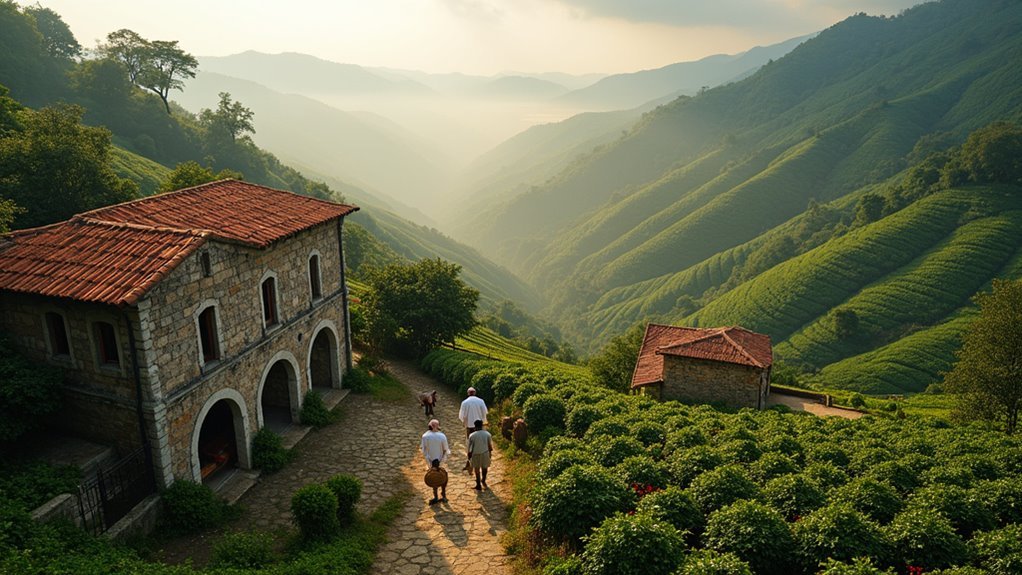
Well, it’s actually quite remarkable how quickly a single plant can transform an entire colony’s destiny.
When French naval officer de Clieu introduced coffee to Haiti in the early 1700s, nobody probably expected what happened next. Within just a few decades, this Caribbean island became — well, you could say it became absolutely dominant in the global coffee trade.
By 1788, Haiti was supplying half of the world’s coffee. Half! That’s like controlling the internet today, honestly.
By 1788, Haiti controlled half the world’s coffee supply — imagine having that kind of global market dominance today.
The plantations flourished under French colonial rule, creating wealth that would reshape Haiti’s economy and, unfortunately, its social structure for generations.
Revolution and Decline: How Political Upheaval Shaped Coffee Production
When the Haitian Revolution erupted in 1791, it didn’t just challenge colonial rule — it basically turned the entire coffee industry upside down.
The plantations that had made Haiti the world’s coffee king were suddenly in chaos.
Well, you can imagine what happened next — production plummeted as the complex colonial system collapsed.
Nature’s Challenge: Environmental Disasters and Their Impact on Coffee Cultivation
While political upheaval devastated Haiti’s coffee industry, nature itself would prove to be an equally relentless adversary.
The 2010 earthquake—a massive 7.0 magnitude disaster—literally shook the foundations of coffee farming, destroying farmlands and infrastructure.
But that wasn’t the only challenge, really. Deforestation became a silent killer, stripping away the natural protection that coffee plants desperately needed.
Climate conditions grew increasingly unpredictable, leading to rejected beans and failed harvests. It’s like watching a perfect storm unfold in slow motion.
Unpredictable weather patterns devastated coffee crops, creating a cascade of agricultural failures that unfolded with devastating inevitability.
These environmental disasters didn’t just hurt production—they systematically dismantled Haiti’s ability to compete in global coffee markets.
The Distinctive Character: Exploring Haitian Coffee’s Unique Flavor Profile
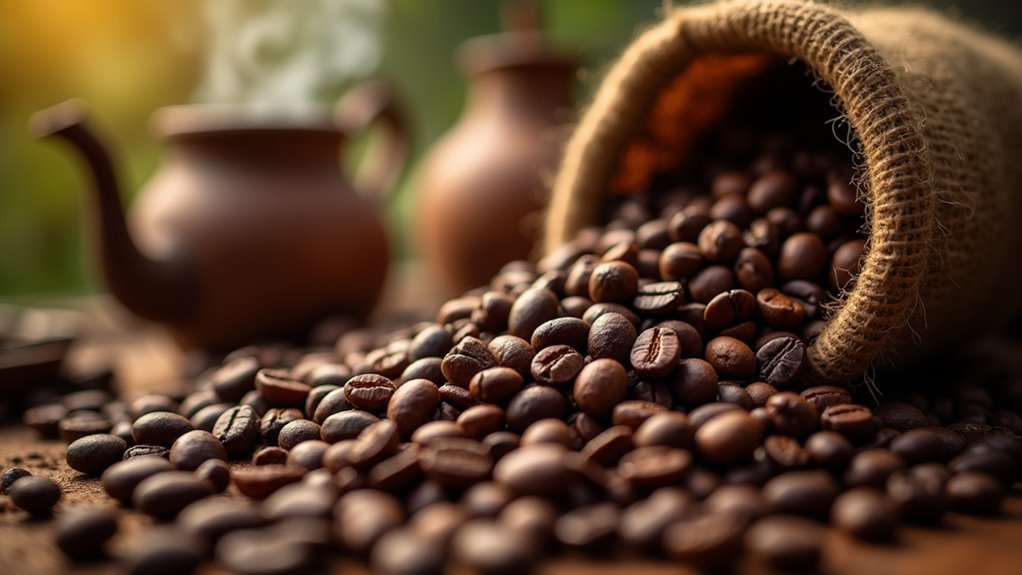
Despite centuries of setbacks and natural disasters, Haitian coffee has managed to preserve something truly special—its distinctive flavor profile that sets it apart from beans grown anywhere else in the world.
The mountainous terrain creates ideal conditions for cultivating exceptional Arabica beans. What makes Haitian coffee unique is its mellow character with pronounced chocolate notes and natural sweetness. The low acidity makes it incredibly smooth, almost like velvet on your palate.
Blue Mountain varieties from high-elevation farms are particularly prized. It’s this distinctive taste that’s helping Haiti reclaim its position in the premium coffee market today.
Traditional Methods Meet Modern Innovation: Brewing Techniques and Industry Evolution
The rich flavors that define Haitian coffee beans reach their full potential through carefully refined brewing methods that have evolved over generations.
Traditional brewing involves the ‘tassé,’ a cherished coffee pot that’s been used for decades.
Well, actually, it’s fascinating how these time-honored techniques are now meeting modern innovation.
Contemporary brewing innovations include:
- French press and pour-over methods emphasizing freshly ground beans
- Organic and fair-trade production with eco-friendly packaging
- Coffee tourism development and international brand collaborations
I think the careful attention to water temperature and brewing time really makes all the difference in achieving peak flavor extraction.
Rising From the Ashes: Haiti’s Coffee Renaissance and Future Prospects
After centuries of setbacks that nearly decimated what was once the world’s coffee powerhouse, Haiti’s coffee industry is experiencing a remarkable revival that’s honestly quite inspiring to witness. Modern initiatives focus on sustainable farming and fair-trade partnerships, while high-elevation regions produce exceptional Arabica beans that compete globally.
| Revival Factor | Impact |
|---|---|
| Fair-trade partnerships | Stable farmer income |
| Sustainable practices | Environmental restoration |
| Premium brand development | Market positioning |
| International collaboration | Global visibility |
| Coffee tourism | Economic diversification |
This renaissance isn’t just about coffee—it’s rebuilding communities devastated by decades of challenges.
Frequently Asked Questions
What Specific Coffee Varieties Are Grown in Haiti Besides Arabica?
The provided knowledge focuses primarily on Arabica cultivation in Haiti’s mountainous regions. While the information emphasizes premium Arabica beans from high-elevation farming, no other specific coffee varieties are mentioned.
How Much Does Authentic Haitian Coffee Typically Cost per Pound?
Authentic Haitian coffee prices vary considerably depending on quality and sourcing methods. Premium fair-trade beans typically cost $12-25 per pound, while specialty high-altitude varieties can reach $30-40 per pound retail.
Which Countries Are Haiti’s Main Competitors in the Specialty Coffee Market?
Like David facing Goliath, Haiti competes against coffee giants Jamaica’s Blue Mountain, Ethiopia’s heirloom varieties, and Colombia’s established brands. These nations dominate specialty markets through superior infrastructure, marketing resources, and consistent quality control systems.
What Certifications Do Haitian Coffee Farms Need for International Export?
Haitian coffee farms require organic certification, fair trade certification, and food safety standards compliance for international export. Additionally, they must meet importing countries’ phytosanitary requirements and quality grade specifications.
How Do Haitian Coffee Workers’ Wages Compare to Other Caribbean Producers?
Haitian coffee workers typically earn lower wages compared to other Caribbean producers due to economic instability and limited infrastructure. However, fair-trade initiatives are gradually improving compensation standards across participating farms.


