
You’ll find the AeroPress delivers exceptional coffee in just 1-1.5 minutes with foolproof brewing that’s hard to mess up. It’s incredibly portable and versatile – perfect for everything from espresso-style shots to cold brew experiments. However, you’re limited to brewing only 1-3 cups at a time, and honestly, the plastic construction isn’t the most appealing aesthetically. The learning curve might feel awkward initially, but once mastered, it’s faster than most methods. Continue exploring to understand exactly how these factors might impact your daily brewing routine.
What Makes the AeroPress Stand Out Among Coffee Makers
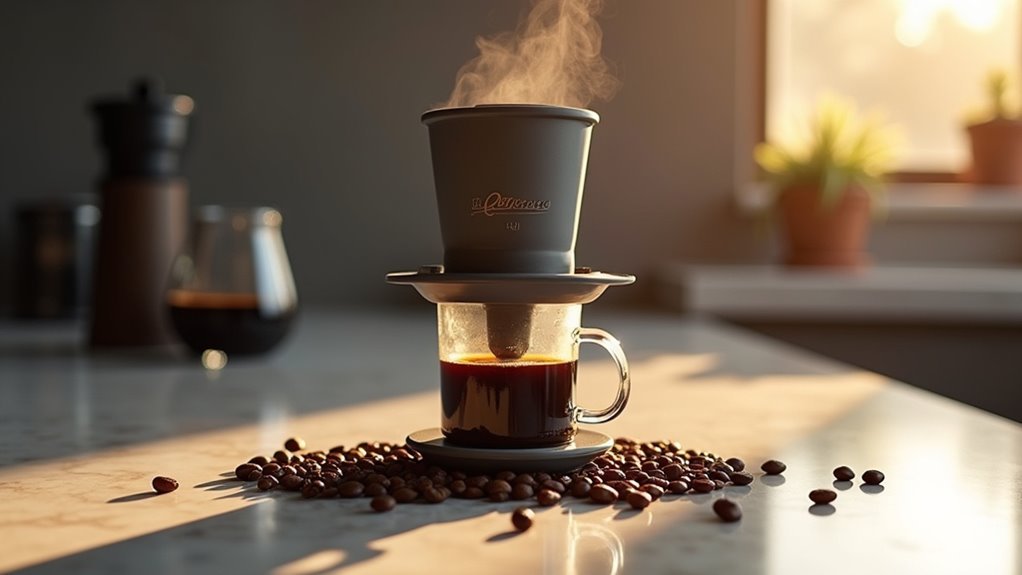
Simplicity might be the AeroPress’s greatest strength, but it’s actually the combination of speed, versatility, and foolproof design that sets it apart from other coffee makers.
You’ll brew a cup in just 1-1.5 minutes – no waiting around like with drip machines. Unlike finicky espresso equipment, you can’t really mess this up. Well, maybe the first few times feel awkward, but it becomes second nature quickly.
The versatility is incredible too. You can experiment with different techniques, make cold brew, or even attempt latte-style drinks. It’s like having a coffee lab that fits in your backpack.
Performance Analysis: Speed, Simplicity, and Brewing Results
When you’re actually timing the AeroPress in action, the speed claims aren’t marketing hype – they’re legit.
You’ll brew a full cup in under two minutes, which honestly beats most methods I’ve tried. The process is surprisingly simple once you get the hang of it – though I’ll admit the first few attempts felt a bit clunky.
The two-minute brew time isn’t just fast – it’s genuinely faster than most brewing methods once you master the technique.
What really impresses me is the brewing results. You get this rich, concentrated coffee that’s like a cross between espresso and drip coffee.
It’s smooth, clean, and you can taste the coffee’s actual flavors without any bitterness.
Durability and Design: Build Quality Assessment
After putting the AeroPress through months of daily use, I can confidently say this thing is built like a tank – well, if tanks were made from plastic.
The BPA-free construction feels surprisingly sturdy in your hands. I’ve dropped mine countless times, and it’s still going strong.
Sure, it’s not winning any beauty contests. The utilitarian design screams “function over form,” but that’s actually invigorating.
You’re getting a workhorse, not kitchen eye candy. The plunger mechanism stays smooth after hundreds of brews, though I’m not entirely sure how the rubber seal will hold up long-term.
Still impressive overall.
Weighing the Benefits Against the Drawbacks
Build quality aside, let’s be honest about what you’re actually getting with the AeroPress – because no coffee maker is perfect, even one with a cult following.
You’ll love how quickly it brews and cleans up. The versatility is actually pretty impressive, letting you experiment with different techniques.
But here’s the thing – it only makes one to three cups, so forget brewing for a crowd. The plastic design won’t win any beauty contests either.
Still, for the price point and convenience factor, these drawbacks feel pretty minor compared to what you’re getting.
Frequently Asked Questions
What Grind Size Works Best for Aeropress Coffee Brewing?
You’ll want to dance with a medium-fine grind that’s slightly coarser than espresso but finer than drip coffee. This sweet spot extracts flavors perfectly during AeroPress’s quick brewing time, giving you rich, smooth coffee every time.
How Much Coffee and Water Should I Use per Cup?
You’ll want to use about 17 grams of coffee with 220 grams of water for one cup. This creates a 1:13 ratio that produces rich, concentrated coffee you can dilute to taste.
What’s the Ideal Water Temperature for Aeropress Brewing?
You’ll want water heated to 175-185°F for AeroPress brewing. If you don’t have a thermometer, let boiling water cool for about 30 seconds before pouring it over your coffee grounds.
Can I Make Cold Brew Coffee With an Aeropress?
You can make cold brew with your AeroPress, though it’s not traditional cold brew. You’ll steep coffee grounds in cold water, then press. It’s more like iced coffee than true cold brew.
How Often Should I Replace Aeropress Filters and Parts?
You’ll want to keep your ducks in a row by replacing AeroPress filters after each use, while the rubber plunger seal and other parts typically last years with proper care and regular cleaning.


