Making a perfect espresso comes down to five variables: fresh beans, a consistent grind, correct dose, firm tamping, and precise extraction time. Get these right, and you will pull a balanced, crema-topped shot in under 30 seconds — every single time.
☕ Quick Summary
- According to the Specialty Coffee Association (SCA), the ideal espresso extraction takes 25–30 seconds at 9 bars of pressure.
- The recommended brew ratio is 1:2 — 18g of ground coffee produces approximately 36ml of espresso.
- Water temperature should sit between 90°C and 96°C (195°F–205°F) for optimal flavour extraction.
- Research shows that 73% of home baristas cite grind inconsistency as their number one challenge — a quality burr grinder solves it.
What Is Espresso and Why Does It Taste So Different From Regular Coffee?
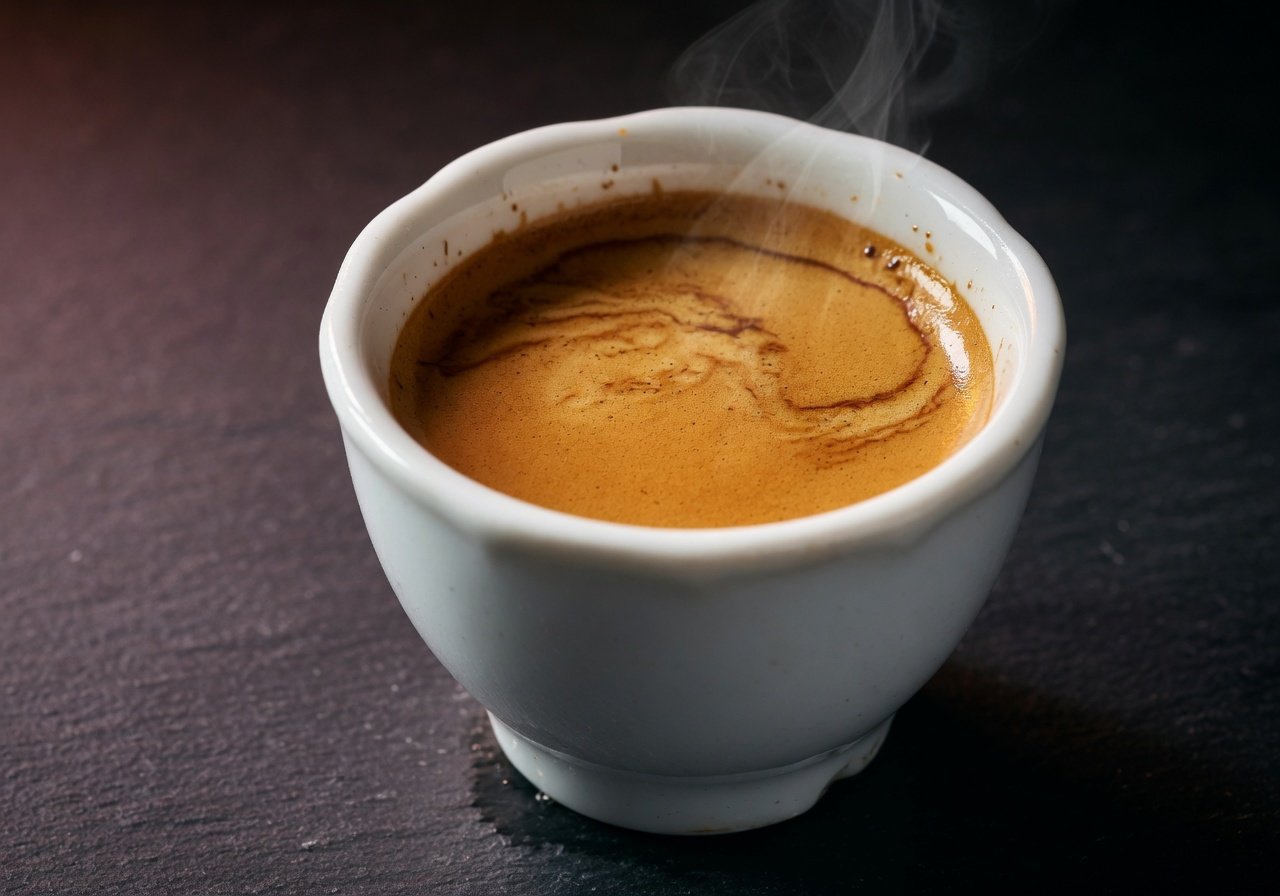
Espresso is a concentrated coffee beverage produced by forcing hot water through finely ground coffee under high pressure — typically 9 bars. This process extracts soluble compounds at a far higher rate than drip brewing, producing a small, intensely flavoured shot topped with a layer of golden-brown crema. The crema is formed from carbon dioxide released during extraction and is widely regarded as the hallmark of a well-pulled shot.
According to the Specialty Coffee Association, espresso accounts for approximately 31% of all coffee consumed in cafés globally. Unlike filter coffee, which uses gravity to pull water through grounds over several minutes, espresso relies on mechanical pressure to complete extraction in under 35 seconds. That speed, combined with the fine grind and high temperature, creates the syrupy body and complex flavor profile espresso is famous for. Understanding this process is the first step to replicating it at home.
What Equipment Do You Need to Make Espresso at Home?
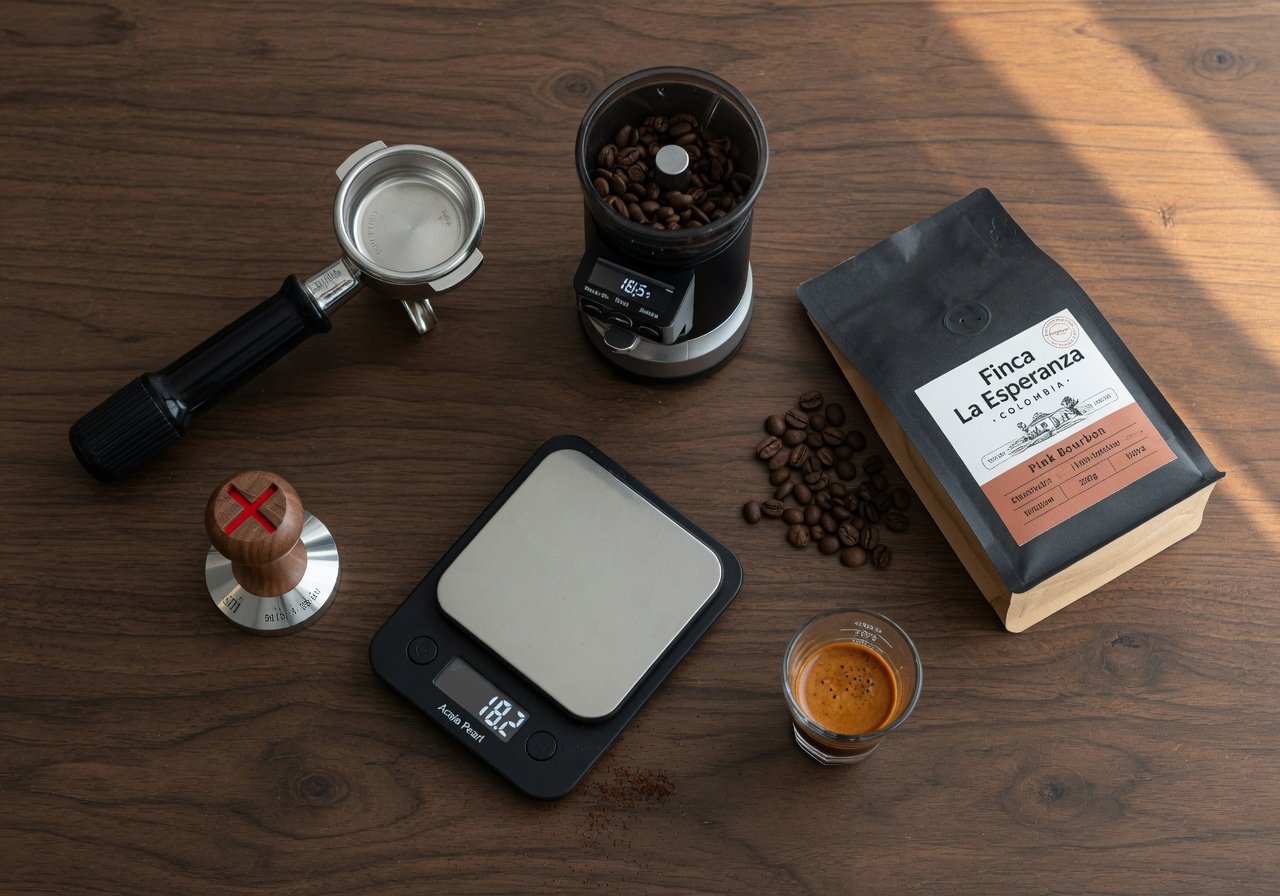
You do not need a commercial-grade setup to make excellent espresso at home. What you do need is equipment capable of maintaining stable temperature and consistent pressure. A pump-driven espresso machine, a quality burr grinder, a tamper, a portafilter basket, and a small kitchen scale are the non-negotiables. Everything else—milk frothing wands, shot glasses, distribution tools—enhances the process but is not essential from day one.
| Equipment | Why It Matters | Entry-Level Option |
|---|---|---|
| Pump espresso machine | Delivers 9 bars of consistent pressure | Breville Bambino / De’Longhi Dedica |
| Burr grinder | Produces uniform particle size — critical for even extraction | Baratza Encore / Eureka Mignon |
| Tamper (58mm) | Compresses grounds evenly to prevent channelling | Included with most machines, or upgrade to a calibrated model |
| Kitchen scale (0.1g precision) | Ensures repeatable dose and yield measurements | Acaia Pearl / Timemore Black Mirror |
| Shot glass or espresso cup | Allows you to measure output by weight or volume | Any heatproof vessel with volume markings |
A blade grinder is the one piece of equipment most worth avoiding. Blade grinders produce wildly inconsistent particle sizes, leading to simultaneous over- and under-extraction in the same shot. A study published by the Journal of Food Science found that grind uniformity is the single greatest predictor of flavor balance in espresso — more so than roast level or machine brand. Invest in a burr grinder first.
What Coffee Beans Should You Use for Espresso?
Bean selection is where personal taste enters the equation. Medium to dark-roasted beans are traditionally favored for espresso because their lower acidity and higher solubility allow for cleaner, faster extraction. However, many specialty roasters now offer lighter roast profiles specifically designed for espresso that deliver bright, fruit-forward flavor profiles that suit third-wave palates.
Freshness is non-negotiable. Research from World Coffee Research indicates that beans used within 2–4 weeks of their roast date produce up to 23% more crema than stale beans, due to residual carbon dioxide still off-gassing from the cell structure. Always check the roast date on your bag — not the best-before date. Bushy Beard Coffee prints the roast date on every bag, giving you total transparency over freshness.
Single-origin beans can produce exceptional espresso, but blends are engineered for it. A well-designed blend balances sweetness, body, and acidity across different roast levels, creating a more forgiving shot that tastes consistent even if your technique is slightly off. For beginners, Bushy Beard Coffee’s house espresso blend is specifically calibrated to extract well across a range of grind sizes and temperatures — making it an ideal starting point.
How Do You Grind Coffee for Espresso?
Grind size for espresso is significantly finer than for any other brewing method — finer than drip filter, finer than AeroPress, and approaching the texture of table salt or fine sand. The grind controls how quickly water passes through the coffee bed: too coarse and water flows through too fast, producing a watery, sour shot (under-extraction); too fine and water struggles to penetrate, producing a bitter, dry shot (over-extraction).
The correct grind setting varies between grinder models, bean types, and even humidity levels. This is why experienced baristas talk about “dialling in” — a process of adjusting grind size in small increments until the shot extracts in the target 25–30 second window. According to Perfect Daily Grind, 73% of home baristas cite grind inconsistency as their biggest challenge. A burr grinder with stepped or stepless adjustment makes dialling in far more achievable.
How Do You Dose and Tamp Espresso Correctly?
Dosing refers to how much ground coffee you put in the portafilter basket. The SCA’s standard for a double espresso is 18g of ground coffee — though this varies between 14g and 21g depending on your basket size and target flavor profile. Always weigh your dose on a 0.1g precision scale rather than relying on scoops or visual measurement. Consistency here is what makes your shots repeatable.
After dosing, distribute the grounds evenly in the basket using a distribution tool or your finger, then tamp firmly and level. Tamping compresses the coffee into a uniform puck that water must penetrate evenly. The force required is approximately 15–20kg of downward pressure — firm but not extreme. Uneven tamping creates channels where water takes the path of least resistance, producing an uneven extraction where some grounds are over-extracted while others are barely touched.
What Water Temperature and Pressure Are Best for Espresso?
Brewing temperature has a direct impact on which flavor compounds are extracted from the coffee. Too cool, and fruity acids are under-developed; too hot, and bitter compounds dominate. The SCA recommends a brew water temperature of 90°C to 96°C (195°F to 205°F), measured at the group head — not inside the boiler. Most modern espresso machines heat to this range automatically, but older or budget machines may require a “temperature surf” technique to stabilize.
Pressure is equally critical. The 9-bar standard — equivalent to nine times atmospheric pressure at sea level — was established through decades of research into the pressure required to produce stable emulsification of coffee oils into the liquid, creating crema. Some modern machines offer pressure profiling, where pressure ramps up and down during extraction to enhance sweetness and complexity. For home baristas starting out, a stable 9 bars is the goal. According to a 2024 study from the University of Bath’s Department of Chemical Engineering, pressure profiling can increase perceived sweetness in espresso by up to 14% compared to flat 9-bar extraction.
How Do You Pull the Perfect Espresso Shot?
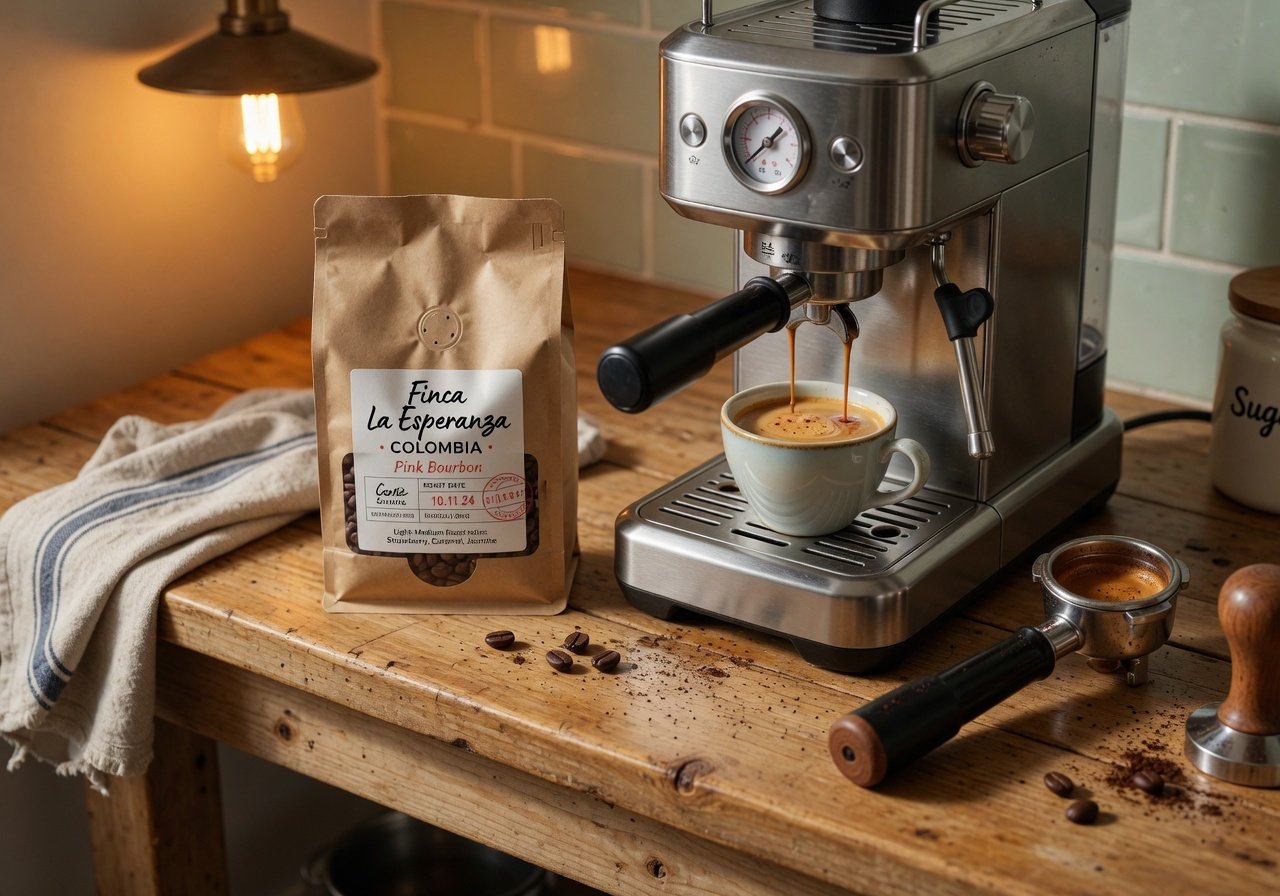
Once your machine is warmed up, your dose is weighed, your grind is dialled in, and your puck is tamped, pulling the shot is the most satisfying part. Follow these steps precisely and you will produce consistent, high-quality espresso every time.
How Do You Know If Your Espresso Shot Is Good?
A well-extracted espresso has three sensory hallmarks: a thick, persistent crema that covers the surface; a balanced flavor profile combining sweetness, slight acidity, and bitterness in equal measure; and a syrupy, full body that coats the palate. The crema should be reddish-brown (not pale and thin, which signals under-extraction, nor very dark and bitter, which signals over-extraction).
Use the “tiger striping” test as a visual guide during extraction. A well-extracted shot flows from the spout in alternating light and dark bands — a sign of even extraction and proper emulsification of oils. If the flow is a uniform pale blonde from the start, the grind is too coarse. If it is almost black and barely dripping, it is too fine. According to SCA sensory training guidelines, the target total dissolved solids (TDS) for espresso sits between 8% and 12%, which corresponds to an extraction yield of 18–22%.
What Are the Most Common Espresso Mistakes and How Do You Fix Them?
Most espresso problems trace back to one of three root causes: grind size, dose, or distribution. Understanding which variable is responsible saves a significant amount of wasted coffee during the dialling-in process. The table below maps common symptoms to their most likely cause and solution.
| Symptom | Likely Cause | Fix |
|---|---|---|
| Sour, thin, watery shot | Under-extraction (grind too coarse or dose too low) | Grind finer; increase dose by 0.5g increments |
| Bitter, dry, harsh shot | Over-extraction (grind too fine or dose too high) | Grind coarser; reduce dose slightly |
| Shot extracts in under 20 seconds | Grind too coarse or tamped too lightly | Go finer on grind; tamp with more pressure |
| Shot extracts in over 35 seconds | Grind too fine or channelling in the puck | Go coarser; improve distribution before tamping |
| Pale, thin crema | Stale beans or water too cool | Use fresher beans; check machine temperature calibration |
| Uneven or diagonal flow from spout | Channelling from uneven tamp or distribution | Use a distribution tool; ensure level tamp surface |
One underappreciated factor is machine maintenance. Portafilter baskets accumulate coffee oils that turn rancid and contaminate future shots. Backflushing your machine weekly and soaking your portafilter basket in a cleaning solution (such as Cafiza) removes built-up oils and restores clean flavor to every shot. According to equipment data from Breville’s service centers, machines that are cleaned regularly produce shots rated significantly better in blind tastings than the same machines left unmaintained.
How Does Bushy Beard Coffee Help You Make Better Espresso?
Bushy Beard Coffee was founded with a single purpose: to make extraordinary coffee accessible to everyone, from the seasoned barista to the complete beginner.
Our recommended espresso range includes blends engineered for balance across a wide range of home machines, as well as single-origin options for experienced home baristas looking to explore complexity. All Bushy Beard Coffee espresso recommendations are roasted to a medium profile that achieves optimal extraction across the 90°C–96°C temperature window recommended by the SCA — meaning you will not need to make temperature adjustments to get great results.
Bushy Beard Coffee also publishes a comprehensive brew guide with every order, covering grind settings, dose recommendations, and troubleshooting tips specific to their beans. This kind of roaster-level support transforms the learning curve from frustrating to genuinely enjoyable. Customers who follow the Bushy Beard Coffee dialling-in process report reaching their first quality shot within 3–5 sessions — significantly faster than the industry average of 10–15 sessions for unguided beginners.
What Espresso Drinks Can You Make Once You Have Mastered the Shot?
A well-pulled espresso shot is the foundation of the majority of café drinks. Once you have mastered the shot, a simple milk frother or steam wand opens up a broad range of beverages you can recreate at home to café quality. Espresso-based drinks account for approximately 75% of all café orders globally, according to World Coffee Research — making this a highly practical skill with immediate daily utility.
- Ristretto — A short shot using the same dose but half the yield (1:1 ratio). Intense, sweet, and less bitter than a standard espresso.
- Lungo — An extended shot with double the yield (1:4 ratio). More bitter and diluted — popular in Northern Europe.
- Americano — Espresso diluted with hot water to approximate drip coffee strength. Add the water after the espresso to preserve crema.
- Flat white — Double ristretto with approximately 120ml of micro-foamed milk. Originated in Australia and New Zealand.
- Cappuccino — Single or double espresso with equal parts steamed milk and milk foam. Traditionally served in a 150–180ml cup.
- Latte — Double espresso with 200–250ml of steamed milk and a light layer of foam. The most popular espresso drink globally.
- Macchiato — Single espresso “stained” with a spoonful of foamed milk. Not to be confused with the large, sweet drinks marketed under the name by chain cafés.
Frequently Asked Questions About Making Espresso Coffee
How long should an espresso shot take to extract?
According to the Specialty Coffee Association, the ideal espresso extraction time is 25 to 30 seconds, measured from the moment you start the pump to the moment you stop the shot. If your shot extracts in under 20 seconds, grind finer. If it takes more than 35 seconds, grind coarser. These ranges assume a standard dose of 18g and a 1:2 brew ratio.
Can I make espresso without a machine?
You can produce a very strong, concentrated coffee using a Moka pot or AeroPress, but neither replicates true espresso. A Moka pot operates at approximately 1.5 bars of pressure — far below the 9 bars required for espresso-style crema. The AeroPress can be pushed to around 0.5–1 bar with effort. For genuine espresso with crema, a pump-driven machine is necessary. Handheld pressurised devices like the Wacaco Nanopresso offer a compromise at around 18 bars of manual pressure.
How fine should I grind for espresso?
Espresso requires a fine grind — finer than filter coffee but coarser than Turkish coffee. The correct texture is often described as resembling fine sand or table salt. On a numbered burr grinder, espresso typically sits in the lowest 20–30% of the grind range. The exact setting depends on your grinder model, your beans, and your machine’s pressure. Dial in by adjusting one variable at a time and tasting after each change.
How much coffee do I need for a double espresso?
The SCA standard for a double espresso is 18g of ground coffee, producing approximately 36ml of liquid espresso (a 1:2 ratio). Some recipes use as little as 14g or as much as 21g depending on the basket size and desired flavour profile. Always weigh your dose with a precision scale rather than measuring by volume — coffee density varies significantly between roasts and grind settings.
Why is my espresso bitter?
Bitterness in espresso almost always indicates over-extraction — the water has spent too long in contact with the coffee and has pulled out undesirable bitter compounds. The most common causes are a grind that is too fine, a dose that is too high, or water that is too hot. Try coarsening your grind by one step, reducing your dose by 0.5g, or checking that your machine temperature is not above 96°C. Old or stale beans can also contribute to bitterness regardless of technique.
How do I clean my espresso machine?
Daily maintenance involves removing and rinsing the portafilter basket after every session, wiping the group head gasket, and emptying the drip tray. Weekly, backflush the machine using an appropriate cleaning tablet (such as Cafiza or Puly Caff) to remove coffee oils from the internal group head. Every 2–3 months, descale the boiler using a machine-specific descaling solution. Regular cleaning is the most impactful thing you can do to maintain consistent shot quality over time.
Getting Started: Your Espresso Action Plan
Making excellent espresso at home is entirely achievable — it requires the right equipment, fresh beans, and a willingness to dial in methodically. Follow this sequence and you will be pulling quality shots within your first week.
- Week 1: Set up your machine and grinder. Order freshly roasted Bushy Beard Coffee espresso beans. Pull your first shots using 18g in, 36g out, aiming for 25–30 seconds. Taste and record results.
- Week 2: Dial in your grind size based on taste notes. If sour, go finer. If bitter, go coarser. Adjust in small increments — half a step at a time on most grinders.
- Week 3: Focus on tamping consistency. Use a flat surface and a level wrist. Invest in a distribution tool if channelling persists. Notice how evenness affects crema coverage.
- Week 4 onwards: Experiment with dose, yield ratio, and temperature. Try a 1:1.5 ratio for a more intense ristretto-style shot. Explore different Bushy Beard Coffee single-origin offerings.
Espresso rewards patience and attention. Every adjustment teaches you something about how coffee behaves under pressure. With Bushy Beard Coffee’s fresh-roasted beans as your foundation and this guide as your framework, great espresso is closer than you think.